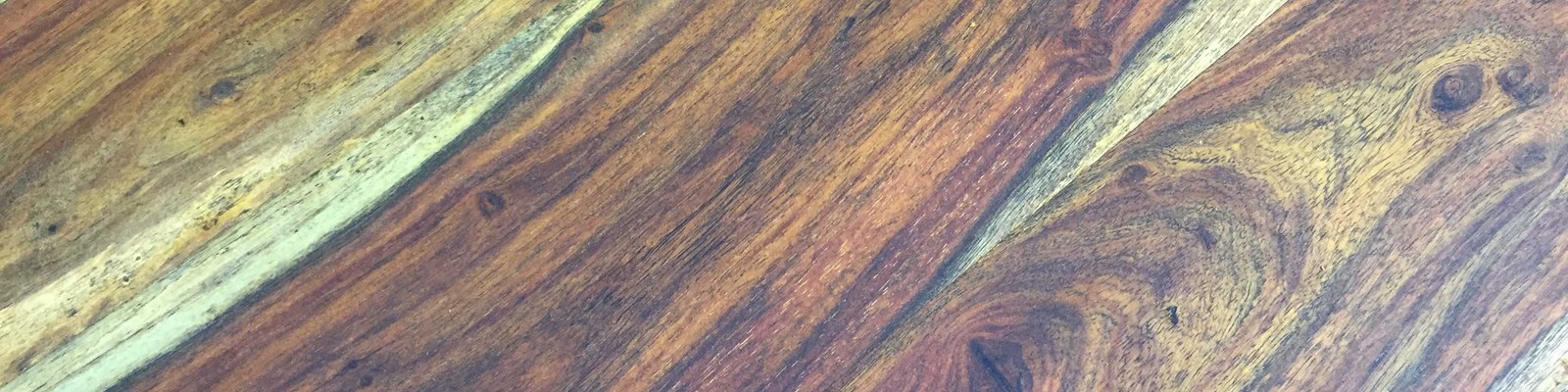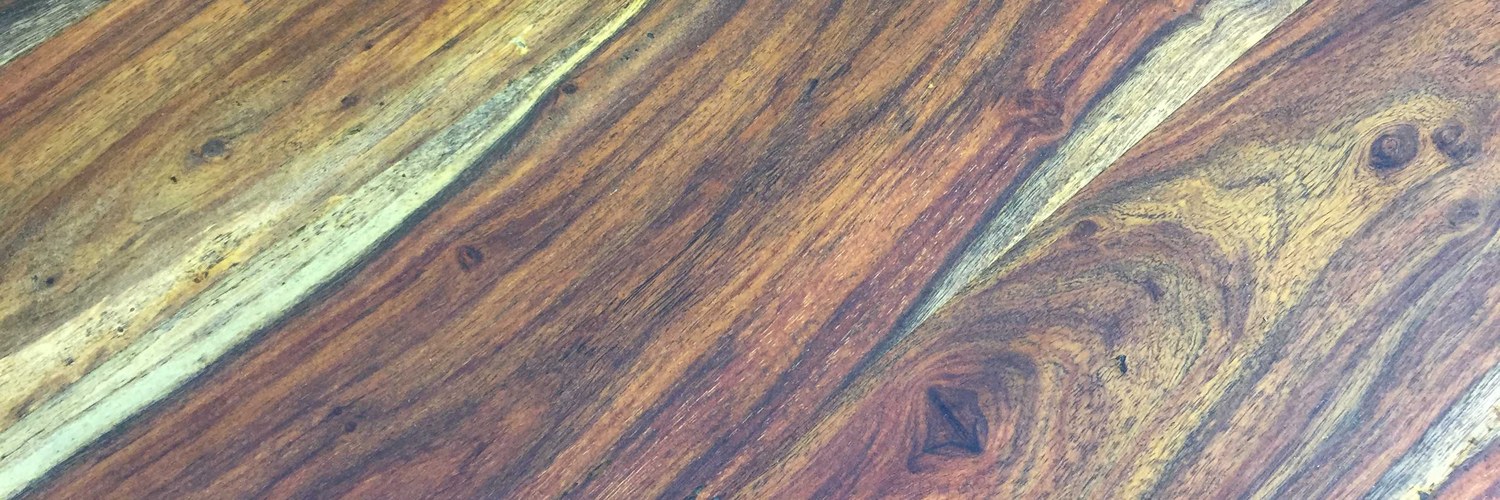
The wood
The wood in my tables is old. It stood as a tree. Then it was used, often for many, many years. Only after that does it come into my workshop. I do not build tables from fresh wood. That is the difference between my tables and a table in a flat cardboard box. This page is about sheesham. There are also tables in oak — they are described at the foot of this page. If the species is stated on the table's own page, that is the one that applies. If the field is empty, ask. Then the species has not been settled yet.
- Used beforethe wood is very old and has been used before
- Dalbergia sissoosheesham, North Indian rosewood — the species this page is about
- Solid woodno veneer, no chipboard
From tree to table
This is the way from a living tree to a table, in two pictures. First the tree, as it grows. Then the boards, as they look here with me, before they are sanded and joined. The second picture is my own.
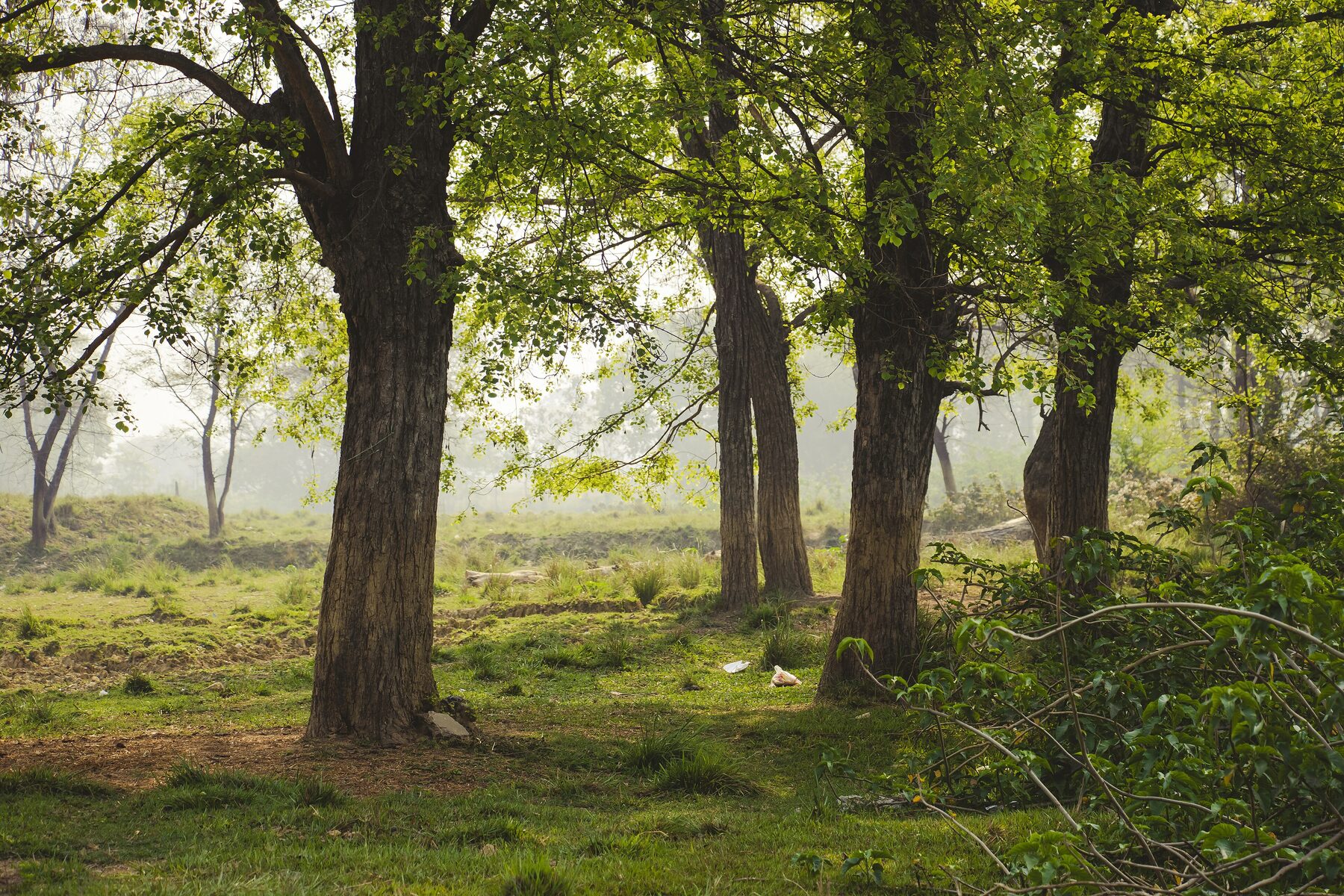
Sheesham trees in morning light, Paklihawa, NepalPhoto: Bijay Chaurasia · CC BY-SA 4.0 · Wikimedia Commons 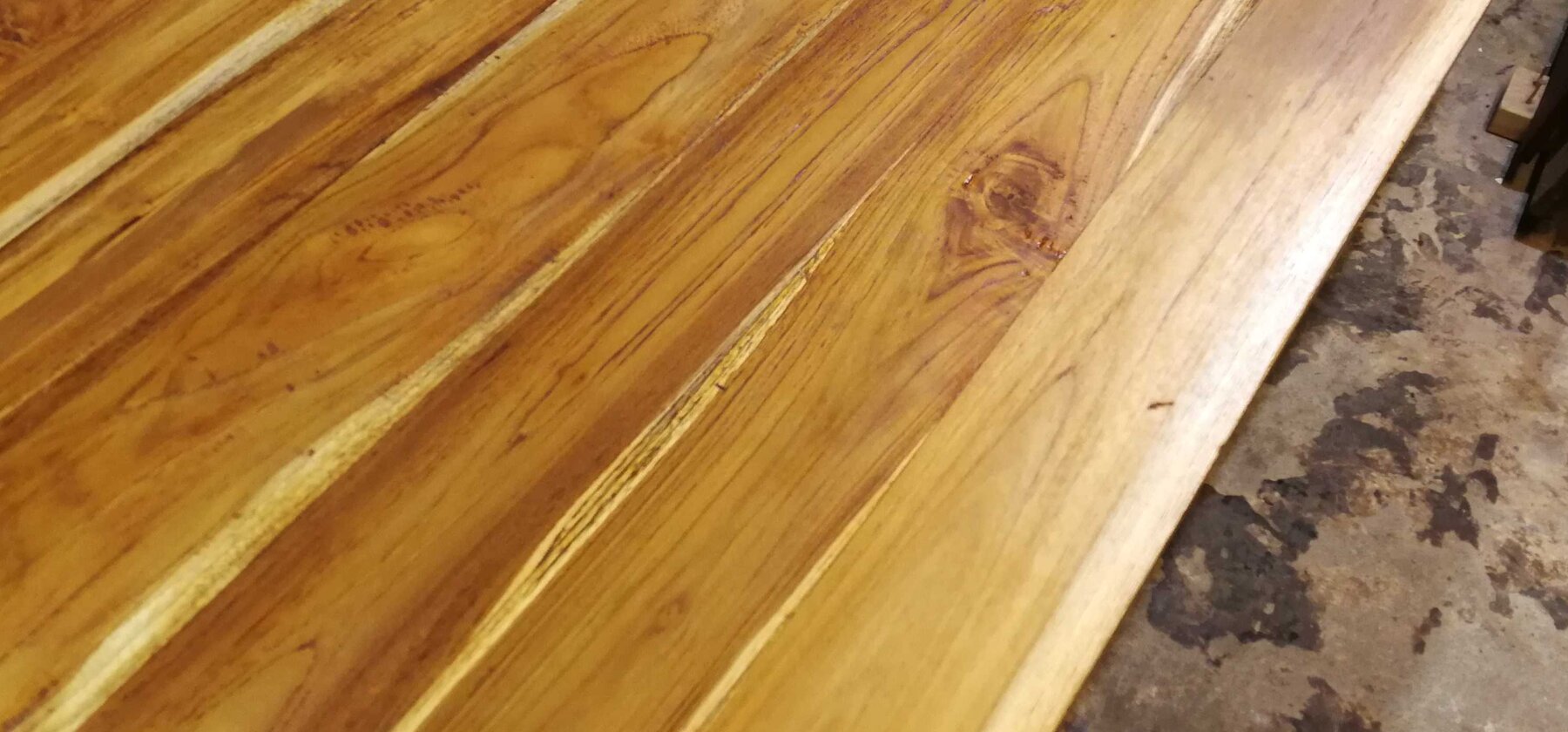
Pale planks with sapwood streaks along the jointsPhoto: Bordmanden
The names of the wood
The wood is called sheesham. It is also spelt shisham. In Latin it is Dalbergia sissoo. In English it is sold as North Indian rosewood, and as sissoo1,3. In Bengali it is shishu. In Nepali it is sissau. In Hindi it is shisham, sisam and tali, among others1. In the Danish furniture trade it is sold as palisander. That is the word I use myself. Palisander is the trade name for timber from the genus Dalbergia. Sheesham is one of the species in that genus4.
Where the tree grows
Sheesham grows wild on the hillsides below the Himalayas3. It is native to Afghanistan, Pakistan, India, Bangladesh and Bhutan1. The tree prefers river banks, up to 1,400–1,500 metres above sea level1,3. It is a large tree, up to 25–30 metres tall1,3. The tree is hardy. It takes light frost, up to 45–50 degrees Celsius and several months of drought1,3.
What the wood is used for in India
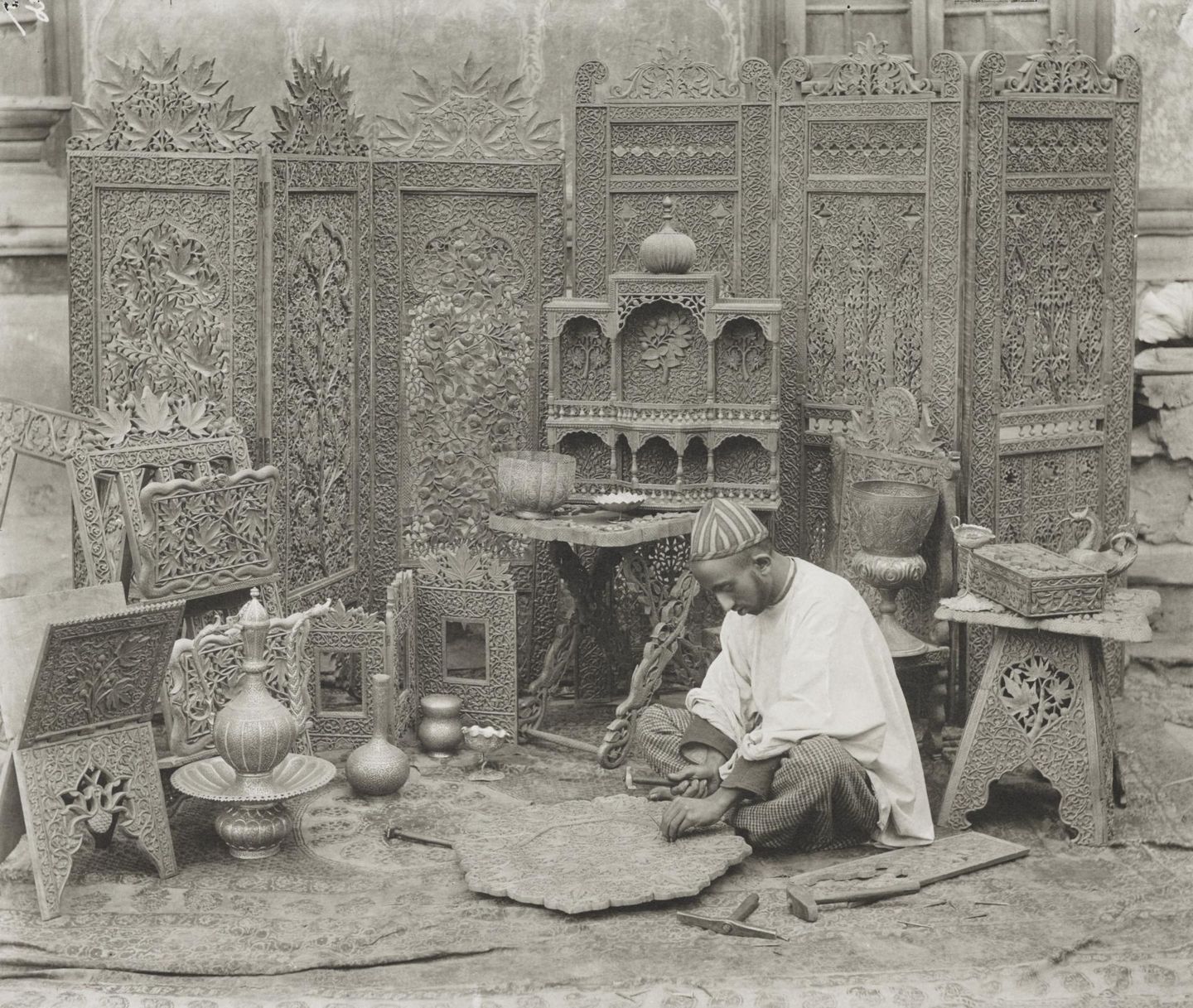
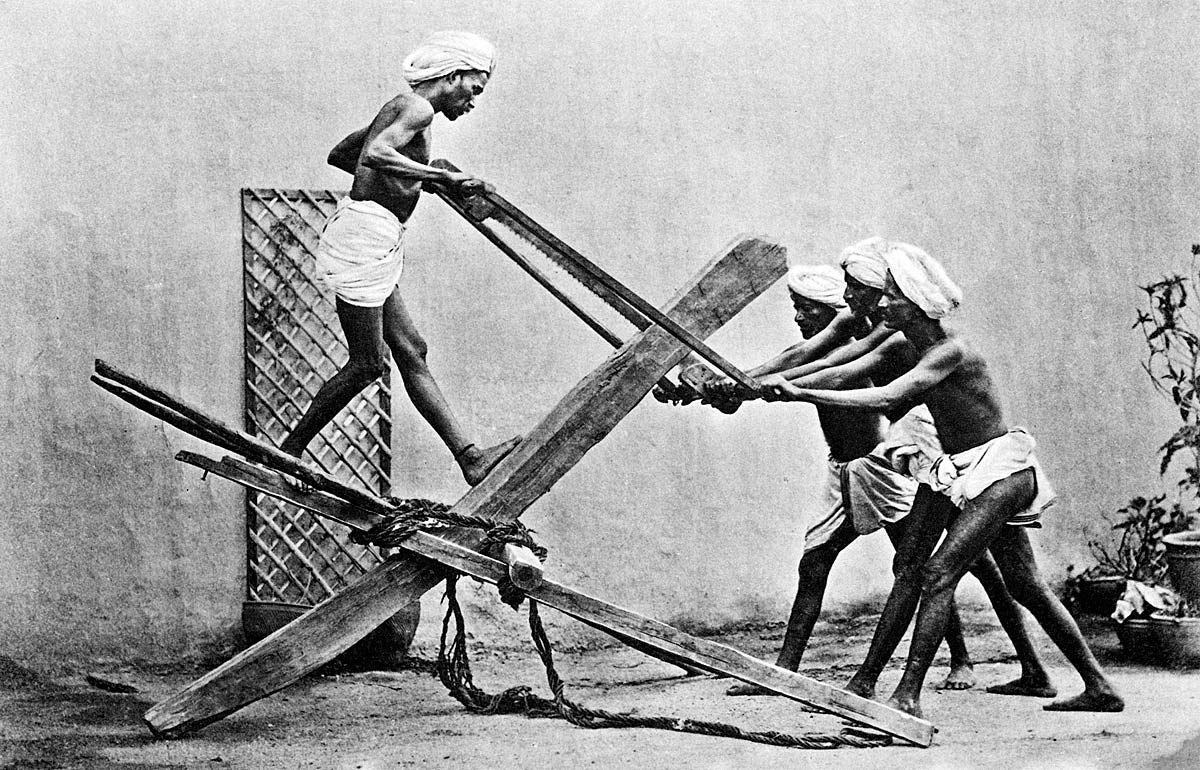
Sheesham is nothing unusual where it comes from. It is one of the most useful timbers in India1. It is made into furniture, cabinets and fine veneer. It is made into plywood. It is made into turned and carved work. It is made into tool handles and sporting goods. In the villages it is made into doors and windows. Even the root wood is used, for tobacco pipes1. It is a wood that everyday life is built from. That is why it is also found in old furniture and old houses. And that is why there is old sheesham to reuse.
Heartwood and sapwood
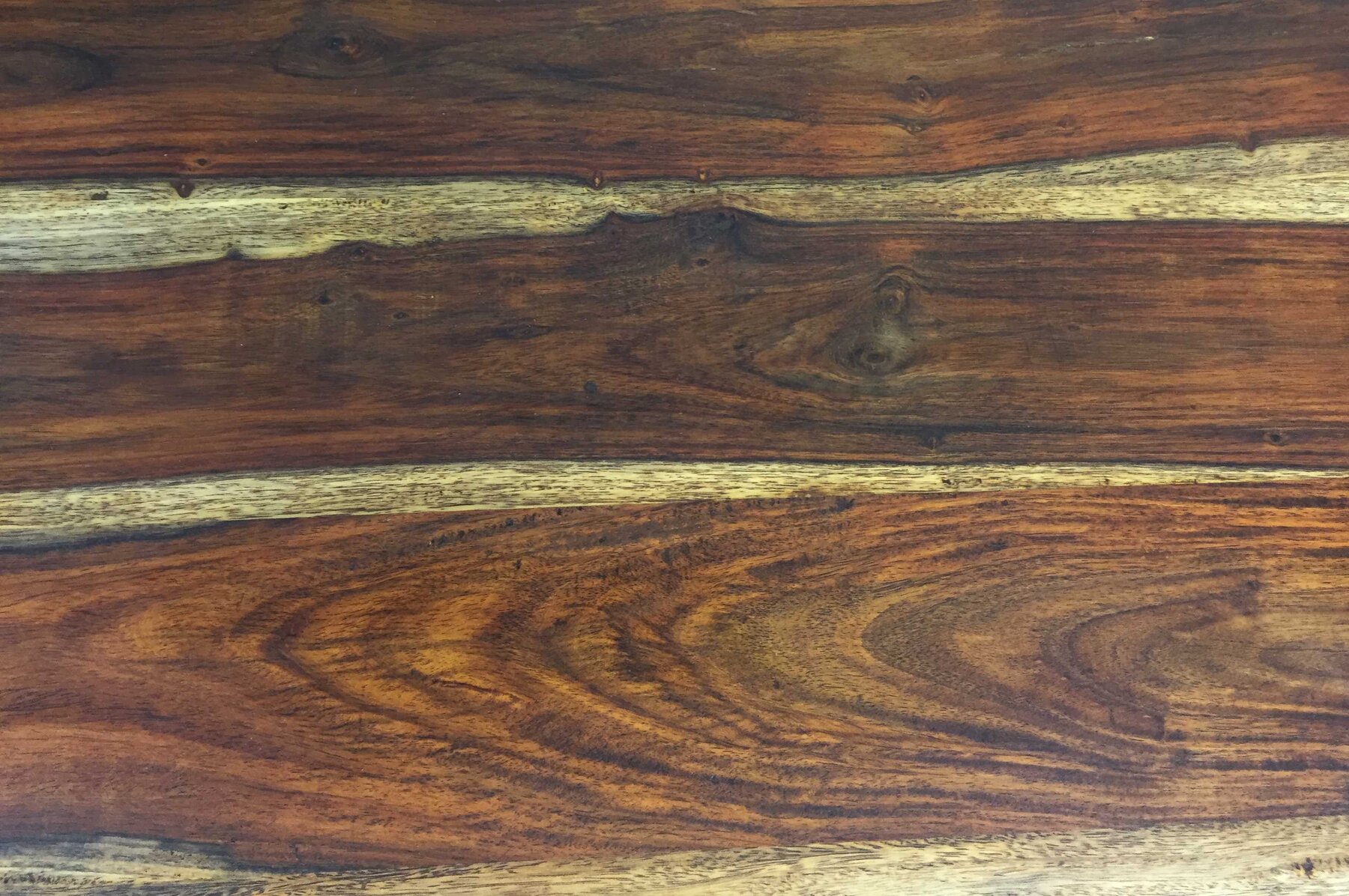
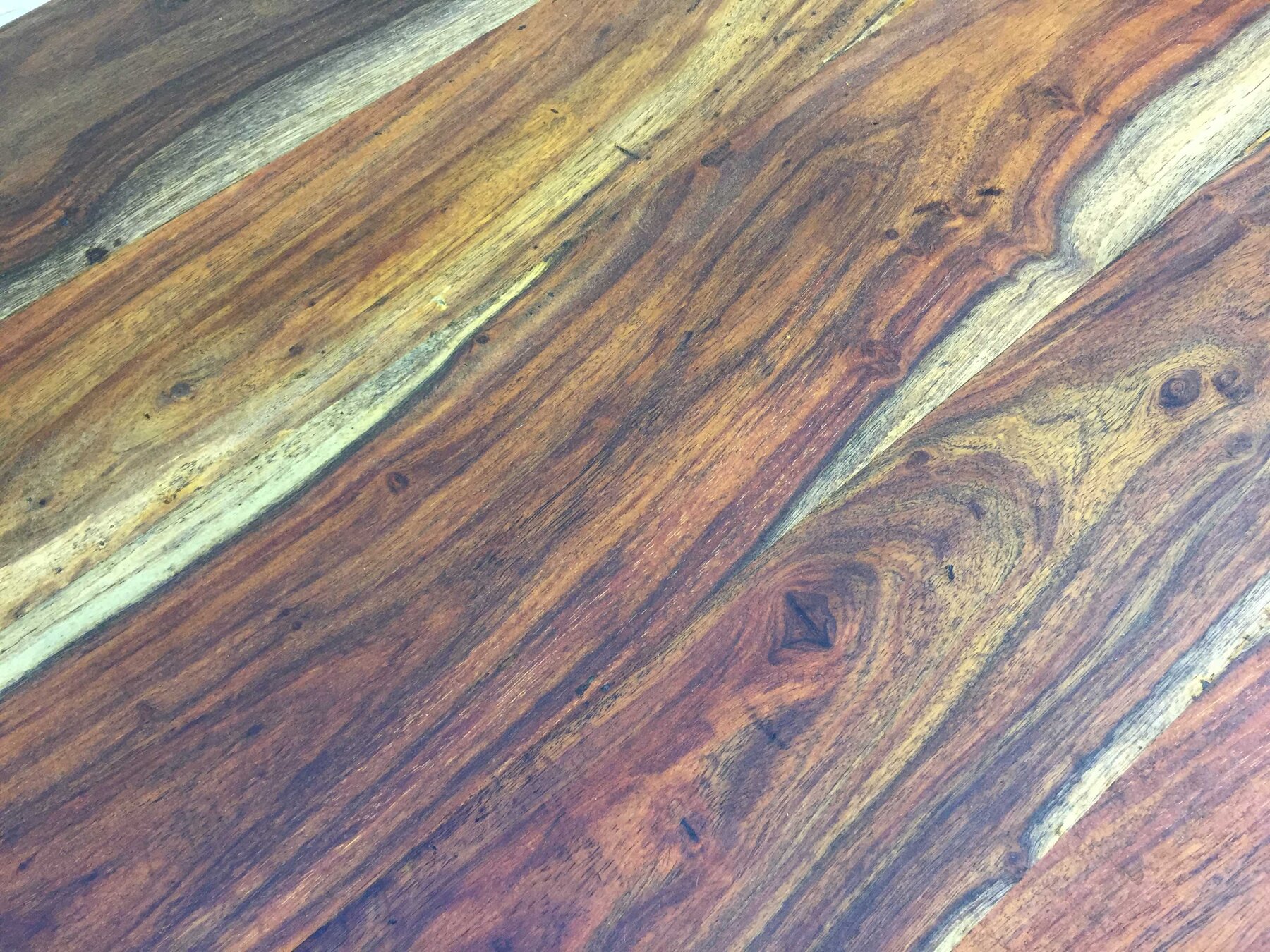
The heartwood, the inner part of the trunk, is golden brown turning to a dark reddish brown. The sapwood is the outer part of the trunk. It is pale, white to straw-coloured, and clearly separated from the heartwood2,3. The heartwood is the furniture timber. It is heavy and close grained, with a specific gravity of 0.62 to 0.821. The heartwood does not rot easily2,3. The sapwood is attacked by termites and borers3. Even so, many of my boards still carry sapwood. It is the pale, yellow streaks you see along the edges. That sapwood has come through the first life, and it gives the top its contrast between dark and light. The sapwood is a little softer than the heartwood, so it takes a mark more easily.
How hard the wood is
Hardness is measured by pressing a small steel ball halfway into the wood and measuring the force it takes. The number is called Janka, and it says something simple: how easily the table takes a mark when daily life goes across it. Sheesham sits high — harder than both oak and beech, and three times as hard as pine. Next to sheesham, pine is like butter left out on the table. Oak is harder than pine, but sheesham is still one and a half times as hard as oak. That is why a sheesham table takes children, keys and many years of use better than softer wood. And if a mark does come, the top can be sanded back again. The figures below are measured the same way for all four, converted from pounds to kilos2,5–7.
- Pine — 245 kg
- Oak — 508 kg
- Beech — 658 kg
- Sheesham — 753 kg
Why old wood is better
This is not sentiment. Wood that has been in use for many decades has done most of its moving. It dried out slowly, through every season. It has found its size. Fresh wood works. It shrinks and swells when it comes into a heated room. That is where cracks and warping come from. The colour changes too. The heartwood grows deeper and redder with the years and with the light. That colour cannot be bought new. It comes with time.
What I can stand behind
I find the wood, take it apart and build a table from it. This is upcycling: old wood becomes a new table instead of being burned, and that is good for the environment and the climate in two ways: no new tree is felled, and the carbon the wood has stored stays in the table instead of going up in smoke. A rough estimate in numbers follows in the next section. There are four things I can stand behind:
- No new tree is felled to build the table. The wood is already here.
- The carbon the tree took up stays in the plank for as long as it is furniture and not firewood.
- A solid plank table can be sanded back again for as long as it exists. There is no veneer to wear through. So there is no reason to replace it.
- The trestles are reused too. IKEA LERBERG is no longer made, so every pair has had a life before. If you choose the trestles, nothing new is produced for the table to stand on.
What a table emits in CO2
According to published environmental product declarations (EPDs), making a new solid wood dining table typically emits 35-90 kg CO2e. In a table from me the top is reused wood, so it counts for almost nothing. It is not zero: workshop power and delivery count too. My own estimate for a table on reused trestles is about 5-20 kg CO2e. With a new steel frame it is about 40-75 kg.
- The saving is not only the table itself. No fresh wood has to be felled, sawn, dried and shipped to make it.
- Method: the EPD figures cover manufacture, from raw material to finished table (modules A1-A3). My own figures are an estimate based on materials and driving, not a measurement.
Marks from the first life
When wood has been used before, you can see it. There are old holes, dark veins and marks from a joint that sat somewhere else. There are differences in colour between planks that have not stood in the same room. I do not sand the history away. Every table is treated on its own terms. Some tables need me to go deeper into the wood. Other times it is a running judgement along the way: what has to go is sanded away, but I stop before the old layers and the charm go with it. That is why no two of my tables are alike. It is worth knowing in advance: a table made from reclaimed wood should be seen as exactly that, and not as a factory top that came out crooked.
Tables in oak
The other species I build in is oak. Most people here already know it, so there is less to explain about the wood itself. Oak is pale and hard, with a quiet grain. Sheesham is dark and heavy, with a pronounced grain. That is the biggest difference between the two, and you can see it. Otherwise I treat them the same: solid boards, no veneer, and a table that can take being used. Most of my oak tables have become desks, and the dining tables I have mostly built in palisander. That says more about what I have built than about the wood — the dimensions are the same, and an oak table can just as well stand in a dining room.
Sources
- ICRAF Agroforestree Database 4.0 — Dalbergia sissoo
- The Wood Database — Sissoo
- Wikipedia — Dalbergia sissoo
- Wikipedia — Palisander
- The Wood Database — English Oak
- The Wood Database — European Beech
- The Wood Database — Scots Pine
- EPD Norge NEPD-9998-9896 — Helland Ark 200x100, 64.0 kg CO2e (A1-A3)
- EPD Norge NEPD-9999-9895 — Helland Ark 260x100, 86.8 kg CO2e (A1-A3)